Source Modern Led Glass Staircase Railing for Homes, Offices, and Decks
Find 30 listings for modern led glass staircase railing suitable for residential, commercial, and outdoor applications. Buyers can compare materials, customization options, and delivery times from verified suppliers in China.
Key considerations
Products List




Comprehensive Sourcing Guide
Strategic Sourcing Guide for Modern LED Glass Staircase Railing Systems
The procurement of modern LED glass staircase railing systems represents a significant investment in architectural safety and aesthetic value. For B2B buyers, navigating this specialized market requires a disciplined approach that distinguishes between generic railing components and integrated lighting solutions. The available supply chain data indicates a diverse range of products, from solid wood structures to tempered glass assemblies, often originating from manufacturing hubs in Guangdong and Shenzhen, China. This guide synthesizes observed market facts to provide a framework for evaluating suppliers, verifying technical compliance, and managing the procurement lifecycle for these complex building elements.
Technical Specifications and Material Integrity
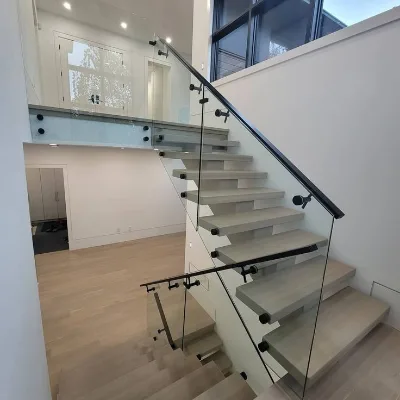
When sourcing modern LED glass staircase railing systems, the primary technical focus must be on the structural integrity of the glass and the compatibility of the lighting integration. The market data reveals that tempered glass is a dominant material specification, with thickness options ranging from 10mm to 19mm. These panels are frequently described as either tempered or laminated, a critical distinction for safety applications in high-traffic areas. Buyers must verify that the glass meets specific impact resistance standards appropriate for the intended load, as the "10/12/15/19 Tempered or Laminated" specification suggests a tiered approach to safety based on height and usage.
The structural framework supporting the glass is equally vital. Observed product attributes indicate that stringers can be configured as single or double beams, often constructed from stainless steel grades such as SUS304, SUS316, or SUS316L. The choice of stainless steel grade is not merely aesthetic; it dictates the corrosion resistance of the system, particularly for outdoor applications where exposure to moisture and salts is a concern. The railing height is typically standardized between 900mm and 1200mm, though customization is frequently available to meet specific local building codes.
Regarding the LED integration, while the core keyword specifies "LED," the provided product facts highlight various handrail material options including wood, PVC, and stainless steel. A critical procurement consideration is ensuring that the chosen handrail material is compatible with the thermal output of the LED system. The mounting design is often specified as "Fascia Mount," which requires precise measurement of the stair stringer or wall surface to ensure a secure fit. Buyers should request detailed shop drawings to confirm that the LED channels are recessed or integrated in a way that prevents heat buildup, which could compromise the structural adhesive or the glass integrity over time.
Compliance, Certification, and Safety Standards
Navigating the regulatory landscape for staircase railings requires rigorous verification of certifications and standards. The supply data explicitly mentions CE certification for certain products, which is a mandatory requirement for selling building components within the European Economic Area. However, the presence of a CE mark on a product listing does not automatically guarantee compliance for every specific project; buyers must request the specific test reports and technical files associated with that certification.
For projects in other regions, such as the United States or Australia, the CE mark alone is insufficient. Buyers must verify compliance with local building codes regarding guardrail height, load-bearing capacity (typically 200 lbs of lateral force), and glass safety glazing standards. The observed "ISOMaterial" certification mention suggests a focus on quality management systems, but buyers should clarify whether this refers to ISO 9001 for quality management or specific material standards.
Furthermore, the "Customized based on your project" standard noted in the data implies that off-the-shelf compliance may not apply. When a product is customized, the supplier often assumes the responsibility of ensuring the final assembly meets the project's specific regulatory requirements. Procurement teams must include a clause in the purchase order requiring the supplier to provide third-party testing results for the specific configuration ordered, particularly for the glass thickness and the structural load of the stainless steel framework.
Cost Drivers and Pricing Dynamics
The pricing for modern LED glass staircase railing systems is highly variable, with observed market ranges spanning from $5 to $10,000 USD. This wide disparity is driven by several key factors, including the complexity of the design, the grade of materials used, and the extent of customization. A basic straight stair railing with standard 10mm glass and 304 stainless steel will occupy the lower end of the price spectrum, while a complex U-shape or modular design featuring 19mm laminated glass, 316L steel, and integrated LED lighting systems will command premium pricing.
Material costs are a primary driver. The transition from standard 304 stainless steel to marine-grade 316L or 316L significantly increases the unit cost due to the higher nickel and molybdenum content required for corrosion resistance. Similarly, the glass thickness and finish options, such as brushed, satin, polished, or mirror, add to the manufacturing complexity and cost. The "Trail Assembly" advantage mentioned in the data suggests that suppliers offering pre-assembly services may charge a premium for the reduced on-site labor and installation time.
Lead times also influence the final cost structure. The observed delivery windows range from 25 to 45 days after shop drawing confirmation. Rush orders or projects requiring expedited manufacturing may incur additional fees. Buyers should also account for packaging costs, as the data indicates various methods ranging from simple plywood boxes to complex "Plywood+Carton+Bubble Film" configurations designed to protect fragile glass during global shipping.
Typical Applications and Design Flexibility
Modern LED glass railing systems are versatile and suitable for a wide array of applications, ranging from residential homes to commercial complexes. The observed product attributes list applications including residential, commercial, porches, balconies, decking, stairs, and terraces. This versatility allows architects and developers to maintain a consistent design language across different parts of a building.
The design flexibility is a major selling point for these systems. The data confirms that "Free Design Customized Avaliable" is a standard offering, allowing for L-shape, U-shape, and modular configurations. This is particularly relevant for spiral or curved staircases where standard straight rails would not fit. The "Single Stair" bench type and "Straight Stair" type observations indicate that suppliers can accommodate both simple and complex geometries.
For outdoor applications, the "Indoor,Outdoor" usage attribute highlights the durability of the materials. However, buyers must be cautious; while the materials are suitable for both environments, the specific finish and coating of the stainless steel and the sealing of the LED components must be verified for the specific climate conditions of the installation site. The "Bridge Railings / Handrails" application suggests that these systems are also used in public infrastructure, where safety and longevity are paramount.
Supplier Evaluation and Operational Capabilities
Selecting the right supplier involves more than just comparing prices; it requires an assessment of their operational capabilities and track record. The data points to a concentration of manufacturers in Guangdong and Shenzhen, China, which are established hubs for metal and glass fabrication. Buyers should verify the supplier's production capacity to handle large orders, as the observed MOQ ranges from 1 to 500 units.
Quality control is a critical differentiator. The "100% Inspection" attribute indicates a commitment to quality, but buyers should request details on the inspection protocol. Does this include visual checks, dimensional verification, and load testing? The "Detailed Installation Guide & Drawing" provision is another key indicator of a mature supplier. A supplier that provides comprehensive installation documentation reduces the risk of on-site errors and ensures the final product performs as intended.
The "Rich Experience" and "Trail Assembly" advantages suggest that some suppliers have a history of handling complex projects. Buyers should ask for case studies or references from previous projects involving similar glass thicknesses and LED integrations. Additionally, the "Punctual Delivery" attribute is a strong indicator of supply chain reliability, but it should be backed by a contract with clear penalties for delays, given the 25-45 day lead time window.
Quality Control and Long-Term Procurement Considerations
Ensuring the long-term performance of LED glass railing systems requires a proactive approach to quality control and maintenance planning. The "Polywood Box Package" and "Plywood or as Your Requirement" packing options highlight the need for robust logistics planning. Buyers should specify packaging requirements that prevent glass breakage and corrosion during transit, especially for international shipments.
Long-term procurement considerations include the availability of replacement parts and the durability of the LED components. While the glass and steel are long-lasting, the LED modules and wiring may require replacement after several years. Buyers should inquire about the warranty period for the lighting system and the availability of spare parts. The "Customized" nature of the product means that off-the-shelf replacements may not be available, making it essential to secure a supply of spare components at the time of the initial order.
Finally, the "Export Markets: Global" attribute suggests that suppliers are experienced in international trade, but buyers must ensure that the product meets the specific electrical safety standards of the destination country. The integration of LED lighting introduces electrical safety requirements that go beyond standard mechanical railing codes. Verifying that the electrical components are rated for the specific environment (e.g., IP ratings for outdoor use) is a crucial step in the final procurement decision. By adhering to these rigorous evaluation criteria, buyers can secure high-quality, compliant, and durable staircase railing systems that meet both aesthetic and safety standards.
FAQs
Can I customize the design of the modern led glass staircase railing?
Yes, free design customization is available for L-shape, U-shape, and modular stairs. Buyers can specify dimensions and glass finishes like brushed or satin to match project requirements.
What glass thickness options are available for the railing system?
Tempered or laminated glass thicknesses range from 10mm to 19mm. These options allow selection based on safety needs and specific project load requirements.
Which stainless steel grades are used for the railing components?
The system uses SUS304, SUS316, or SUS316L stainless steel grades. These materials ensure corrosion resistance suitable for both indoor and outdoor applications.
How long is the delivery time after shop drawing confirmation?
Delivery typically takes 25 to 45 days after the shop drawing is confirmed. This lead time accounts for manufacturing and quality inspection processes.
What certifications are provided for the staircase railing products?
Products carry CE certification and undergo 100% inspection. Some listings also reference ISO material standards to ensure quality management compliance.
Can the railing be installed for outdoor deck and terrace use?
Yes, the railing is designed for indoor and outdoor usage including decks, balconies, and terraces. The materials are selected to withstand various environmental conditions.